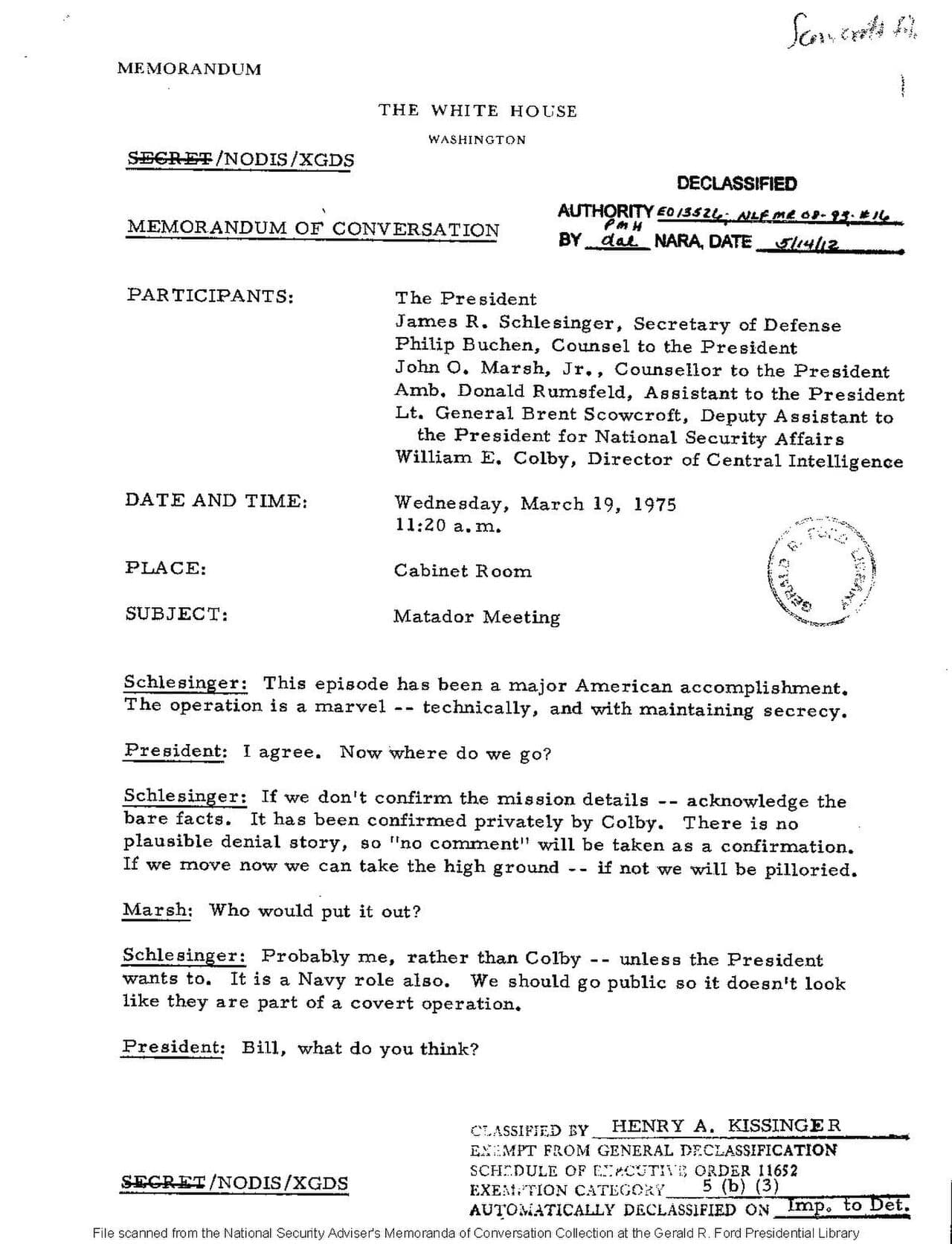
After the press reported in 1975 that the Hughes Glomar Explorer had been built to raise a Soviet submarine, a journalist, Harriet Ann Phillippi, filed a Freedom of Information Act request for records about the ship and the agency’s efforts to keep the story out of print.
The agency had a problem. Releasing the records would confirm the operation. Withholding them as classified would also confirm the operation. It needed a third option.
“We can neither confirm nor deny the existence of the information requested but, hypothetically, if such data were to exist, the subject matter would be classified, and could not be disclosed.”
Dear :
We can neither confirm nor deny the existence of the information requested but, hypothetically, if such data were to exist, the subject matter would be classified, and could not be disclosed.
Phillippi sued. On 16 November 1976 the U.S. Court of Appeals for the D.C. Circuit, in Phillippi v. CIA, accepted that an agency may in some circumstances decline to say whether records exist at all, provided it explains why in as much detail as it can. The reply became known as a Glomar response. The verb is to glomarize.
It has since been used across the federal government, in response to requests about surveillance programs, drone strikes and individual people. On 6 June 2014 the CIA opened an account on Twitter. Its first message read: “We can neither confirm nor deny that this is our first tweet.”